The Call to Become Ourselves (Part Two)

If at the end of the week the worker had enough left to enable him to forget the hell he lived in for a few hours by getting drunk on bad liquor, it was the most he could achieve. The inevitable consequence of such a state of affairs was an enormous increase in prostitution, drunkenness and crime. The utter wretchedness of mankind dawns on one when he reads of the spiritual degradation and moral depravity of those masses whom no one pitied.

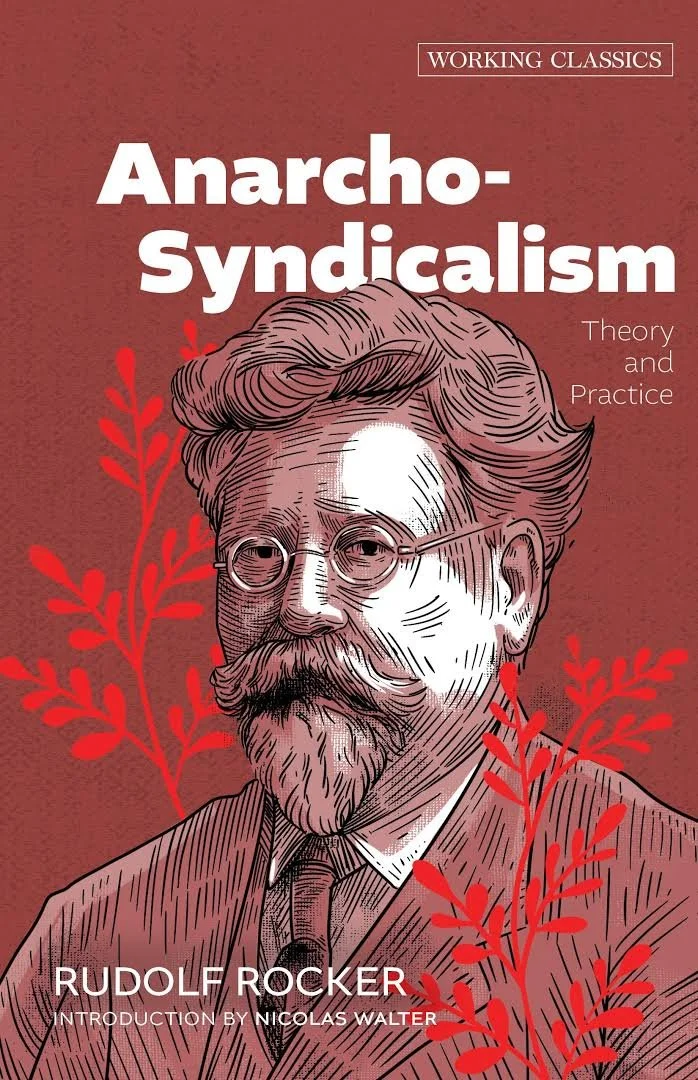
                                                                                                              — Rudolf Rocker[1]


Rudolf Rocker was born in Germany in 1873 and grew up to become an anarcho-syndicalist, as indicated by the man title of the famous short work from which I have taken the above citation. When the Nazis came to power early in the 1930s, he wisely moved from Germany to the United States. He eventually died in Mohegan Colony,[2]New York, in 1958 at the age of 85.

What Rocker says in the above citation concerns the “wage-slavery”[3] that began to characterize workers — and to terrorize them, to put the point very appropriately — according to the dictates of the corporate capitalism that arose with the coming of the so-called First Industrial Revolution, which took place from the mid-18th to the mid-19th centuries CE. Just such terrorizing and enslaving confinement to industrial labor was eventually globalized and — despite the proliferation of superficial appearances to the contrary — greatly worsened with the coming and spread of the so-called Second Industrial Revolution, from roughly 1870 to 1914. That second “revolution” is also, and indeed far more accurately, known as the Technological Revolution, since it was precisely the development and proliferation of varied forms of technology that engendered and sustained it.

When faced with what faces us today in the present age, when the Technological Revolution continues all too much to revolve, it is no wonder that ever-growing numbers of people become addicts. After all, as the famous song of the 1960s “Is That All There Is?” attests, if that’s all there is, then we all just may as well stay addicted, if we already are, or get addicted, if we’re not yet.  


  *     *     *

     [. . .] I have learned the junk equation. Junk is not, like alcohol or weed, a means to the increased enjoyment of life.       Junk is not a kick. It is a way of life.

                                                                                                  — William S. Burroughs[4]


The American author and artist William S. Burroughs was one of the three founders of the Beat Generation, the other two being the poet Allen Ginsberg and the novelist Jack Kerouac. Burroughs was heavily addicted to heroin, which is colloquially known as “junk.” In the same way that, as Burroughs observes in the above lines, “junk” is not, for “junkies,”  just a “kick,” but is instead an entire “way of life,” just so is that true for all addicts. Whatever one becomes addicted to — or, to speak more properly and truly, to which one addicts oneself — indulging in that to which one is addicted is not for addict the pursuit of any mere “kick,” but is instead the addict’s very “way of life.”

As I personally have often enough explicitly pointed out,[5] the very word addicted, heard down into its etymological roots, means “spoken over to.” Ultimately, the English word addicted derives from the Latin addictus, which was a legal term from the days of the Roman Republic referring to a debtor formally spoken over to their creditor.[6] During the days of the ancient Roman Republic in the 5th to 1st centuries BCE, “addicts” were people who, by formal judgment of a duly constituted legal authority, had been  so spoken-over to the jurisdiction of some other person, such as a Lord or other member of the royal class.

Once such formal legal indenturing processes had ceased, however, addiction itself continued. At that point, however, addiction became a matter of one speaking oneself over to some substance or process, just as the quotation from Rudolf Rocker with which I began this current post articulates. Indeed, after the coming of the First Industrial Revolution in the 18th-19th centuries CE, those who had no other option for survival than to become what Marxists have long called “wage-slaves,” were often reduced, for sheer relief, to addicting themselves to a variety of what I myself have long called “objects of addiction.” By that phrase I mean whatever it is to which addicts have spoken themselves over — regardless of whether those “objects” be substances of one sort or another, such as alcohol, heroin, marijuana, or the like, or practices of some sort, such as engaging in sex, over-eating, swearing, jaywalking,[7] or whatever.  


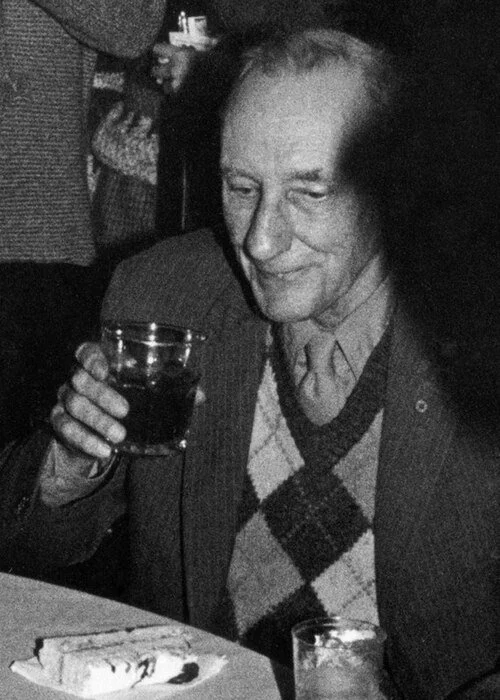
‍ ‍ William S. Burroughs, 1983

*     *     *

     His craving for alcohol was an equivalent, on a low level, of the spiritual thirst of our being for wholeness, expressed in medieval language: the union with God. 

                                                                                                               — Carl G. Jung[8]

What all addictions without exception offer to those who become addicted is a way out, a way of escape — escape from the mere pseudo-life that our modern global capitalist system presents to us all as though it were “the real thing.” In truth, however, what our current global system presents to us as life is in reality nothing but a sort of walking-death.

What addicting oneself to some substance or process ultimately expresses is the yearning for a genuine way of entry into full and genuine life itself at last. Addiction, when understood properly, expresses the addict’s yearning to become  genuinely alive — the yearning to come at last to live life authentically, and in doing so to at last heed the call Nietzsche attributes to conscience in the lines with which I opened the first part of this two-part blogpost, the call to “become who you are.”

Once one does at long last become who one authentically is, all sense of need to escape the pseudo-life of the false, egoistic, in-authentic self — which our dominant coercive power system falsely presents us as being who and all we ever are — vanishes. Along with that vanishing of all such sense of a need to escape, so too vanishes the appeal of addiction, the appeal of offering one to just such an escape.

When that occurs, addiction itself at last reveals its own fullest and profoundest truth — the truth that every addict’s addiction itself is a wandering in the wilderness as the Israelites did. Addicts so wander until they finally reach addiction’s own ultimate goal: the break-down point of inauthentic life, the very point where a break-through into authentic existence at last becomes truly possible.

Thus does the addict heed the call that Nietzsche presents as the call of conscience.

*     *     * 

Addiction is one way of wandering in heed of that call, but it is not the only way. One can be given eyes to see by wandering along other paths than that of addiction. What counts is simply to keep on wandering, going in whichever direction of hears oneself called to go, step by step, moment to moment. So heeding conscience’s call, each one of us thus wandering along the way that each of us is individually given, eventually brings each and all of us at last to becoming whoever we truly are.  

*     *     *

In turn, in making just that very observation, I find myself brought at last almost to the end of this current wandering post — 

But before I go, I have just one more thing to tell you:
     Something has spoken to me in the night, burning the tapers of the waning year; something has spoken in the night, and told me I shall die, I know not where. Saying:
     "To lose the earth you know, for greater knowing; to lose the life you have, for greater life; to leave the friends you loved, for greater loving; to find a land more kind than home, more large than earth ——
     "— Whereon the pillars of this earth are founded, towards which the conscience of the world is tending — a wind is rising, and the rivers flow.”

                                                         ― Thomas Wolfe[9]


[1] Rudolf Rocker, Anarcho-syndicalism: Theory and Practice, trans. Ray E. Chase (London: Seeker and Warburg Ltd., 1938;  reprint Cleveland, OH, 2026), p. 25, describing conditions in Europe after the Industrial Revolution.

[2] An intentionally formed community based at Lake Mohegan in Westchester County, New York, that lasted from its foundation in 1923 to the 1950s.

[3] To borrow a term from Marx and Engels.

[4] William S. Burroughs, Junky (New York: Penguin Book, 1953), p. xvi.

[5] Most especially in Addiction and Responsibility: An Inquiry Into the Addictive Mind   (©Francis F. Seeburger, 1993), the second book I ever published.

[6] The Latin term addictus is derived from ad-, “to, or toward,” plus dictus, the perfect passive participle form of the verb dicere, “to speak.”

[7] I have borrowed the idea of an addiction to jaywalking from a passage in the book Alcoholics Anonymous (New York: Alcoholics Anonymous World Services, 1939, 1955, 1976, 2001), a passage to be found on pp. 37-38 in all four of the editions to date of that book, which in AA is usually referred to simply as The Big Book — the reason for which I will let my readers themselves inquire online or of AA sources in their area.

[8] From a letter Jung wrote to Bill Wilson, co-founder of Alcoholics Anonymous, in 1961, in response to a letter Wilson had written to him. In the lines above Jung is speaking of one of his patients who was addicted to alcohol. Jung’s letter can be found on pages 280-281 of The Language of the Heart: Bill W.’s Grapevine Writings (New York: AA Grapevine, Inc., 1988).

[9] Thomas Wolfe, You Can’t Go Home Again (© New York and London: Harper and Row, 1940), the closing lines of the book.

The Call to Become Ourselves (Part One)

NOTE TO MY READERS: This is my first post in a year. At the bottom of that previous post, which went up on Monday, April 28, 2025, I wrote I’d no longer put up posts at regular intervals, but only “if and when time and the sprit move me to do so.” Since then, I’ve been busy for the last year writing a book I’ve entitled Answering the Call of Thought: A Memoir of My Vocation Into and Beyond Philosophy, which is currently being professionally edited for publication. Now that I have finished writing that memoir, I do finally have the time to write a new post — and the spirit has indeed moved me to write a two-parter, with ”Part One” posted today and “Part Two” to be posted next Monday, May 4, 2026.


What does your conscience say? “You should become who you are.”                                                                   — Friedrich Nietzsche[*]

In the citation from Nietzsche above, that author himself cites conscience. Conscience, as Nietzsche thus tellingly cites it, calls us all to become our very selves.

It makes no sense to issue such a call unless we are not always already whoever we are. If the call of our consciences to become who we are does make sense, it is only because we don’t start out already being whoever we are. Rather, we must expend great time and effort to heed conscience’s call, and by so heeding that call eventually succeed in our ever-ongoing effort to reach that very goal and thereby at last for the very first time come truly and fully to be whoever we are.

Truly to discover who we really are, and then to lay claim to ownership of our own very selves, we must put forth and sustain a long and arduous effort to find those very selves. Till we make such a search, our very selves themselves remain altogether hidden from us.

To accomplish that very task, the task of finding out at last just who we really are, takes a long time, and requires lengthy wandering along the pathways of the lives we find ourselves living — those lives we, each and every one of us, have been given to live, as fully,  deeply, and authentically as we are all able to live them. It is conscience’s call upon us to become ourselves, that first and last gives us that ability. Put just a bit differently, it is hearing and heeding, as best we can moment by moment, that very call itself that en-ables — from en-  "make, put in" + able “capable, fitting, apt” — truly and fully to “become ourselves” at long last.

So becoming ourselves is no simple matter. Not is it something that any of us can possibly fully accomplish, to be honest, in any amount of time short of an entire life-time. We cannot accomplish it in any time short of a life-time, no matter how hard we try to accomplish it. It is in that sense altogether beyond our own power to accomplish it at all.

In those very ways, we are just like the ancient Israelites, as I will explore in more detail in the immediately following section of today’s post.

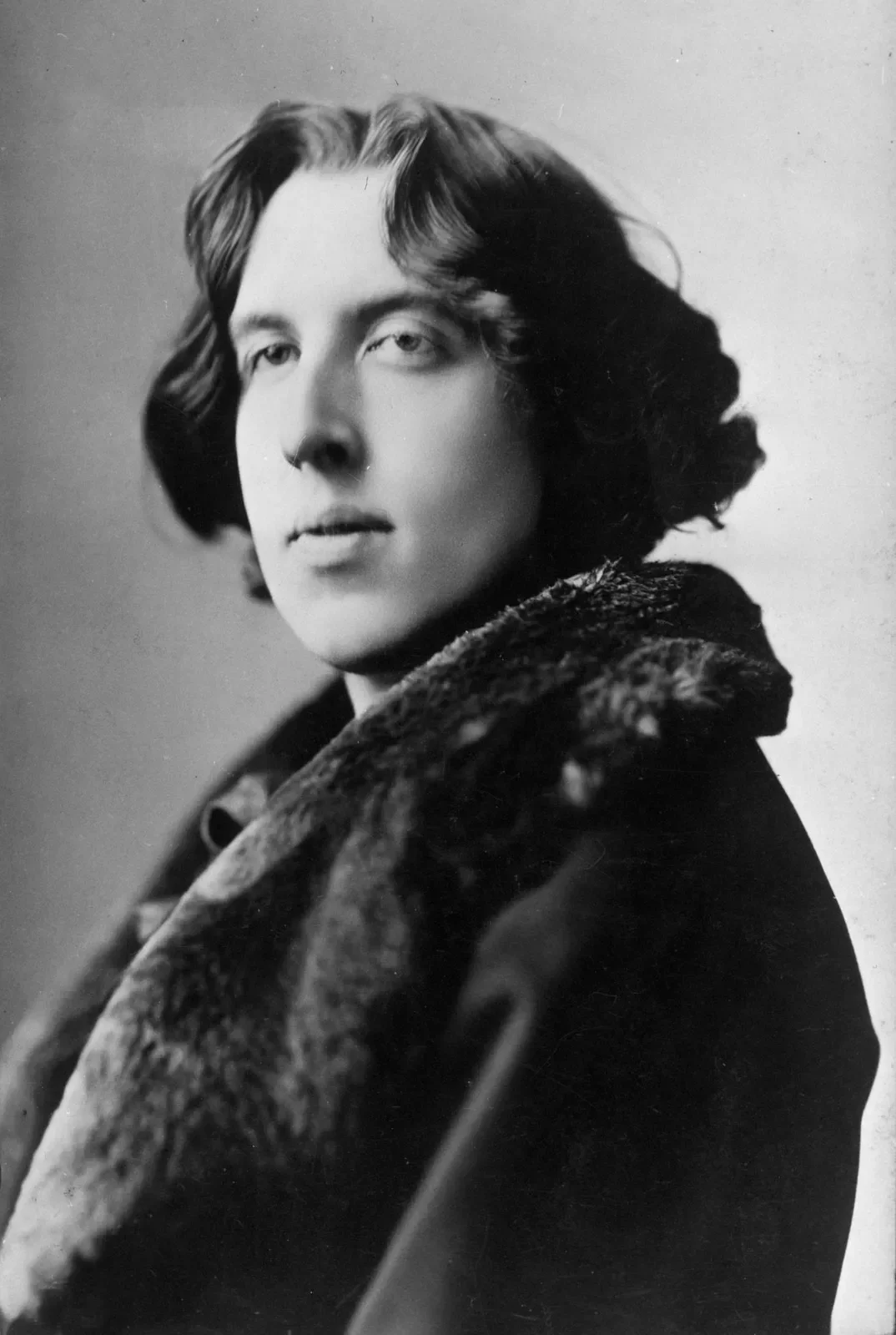
Friedrich Nietzsche

*     *     *

Human beings wander. Human beings don’t at some point first begin to wander. They are always already wandering […].                                                — Martin Heidegger[†]

According to Hebraic scriptures, it took the ancient Israelites a full forty years of aimless wandering in the desert wastelands of the Near East before they at last found their way home, to the place where they had always belonged, and in  coming to which at last they could finally and fully become themselves. Their story[‡] speaks the truth of how anyone and everyone must answer the call that conscience — at least according to Nietzsche, as I cited him writing at the very beginning of this post — addresses to us all, the very call to become who we are.

We are all, without exception, born wandering, just as Heidegger remarks in the citation from him with which I opened this present section of today’s post. In that sense, we are all no different from the Biblical Israelites, regardless of our specific nationality, our religious heritage, or in what region of the earth we find ourselves wandering, always  underway to ourselves.

What is more, so long as we continue to wander in search of our own “promised land,” we are also just like the Israelites of Hebrew scripture in another way. That is, we will all eventually, no matter how long our own “forty years” may take to expire, find our way home, to where we have always belonged.

Israel’s forty years of wandering in the wilderness are traditionally given as occurring sometime around the 15th to 13th centuries BCE. Thousands of years later, Elizabeth Barrett Browning, the great British 19th century CE poet, wrote these wonderful, wonder-filled lines in one of her poems:

Earth’s crammed with heaven, And every common bush afire with God; But only he who sees, takes off his shoes, — The rest sit round it and pluck blackberries, And daub their natural faces unaware.[§]

Let us all pray, both together and separately,  that we may all, each and every one of us, be given eyes to see the truth that all bushes are always burning, and may we all thereby be given at last sense enough to take off our shoes. After all, when our prayer is answered, we will at last see and understand that all along we have indeed been standing — and walking — on holy ground!


Elizabeth Barrett Browning


[*]Friedrich Nietzsche, Die fröhliche Wissenschaft, Aphorismus 270 (my translation).

[†] Heidegger, “Vom Wesen der Wahrheit“ (“On the Essence of Truth”) in Wegmarken: Gesamtausgabe, Bd. 9 (Frankfurt am Main: Klostermann, 1976), p. 196, my translation.

[‡] And it is just that, a “story,” precisely in the sense of being a “fiction” — which is to say something “made up,” given that the word fiction is derived from the Proto-Indo-European root *dheigh- “to form, build.” As William Faukner knew and said, a well-crafted “fiction,” a made-up story of the very sort that is the telling of Israel’s wandering in the desert for forty-years before coming to “the promised land,” speaks more genuine truth than does even the most accurate “journalistic account.”

[§] Aurora Leigh, Book Seven (1856).

Choosing to Wait (My Delayed Response to a Friend)

A bit over half a year ago now, on October 14 of 2024, I put up on this blog-site my post “The Choice to Choose.” Once he had read that post, a friend of mine asked me a question about it. He asked me if what I said in that post entailed that it was always the case that one should make a choice immediately when one is faced with options. I replied that there were often cases in which one needed to wait until the right way to go became clear, before one chose to go any given way.

That is, my reply to my friend’s question was that there were often moments in one’s life when precisely the right choice to make at that very moment was the choice to wait for the situation further to clarity itself.  In other words, I replied to him that there were times when choosing to wait was precisely the right choice for one to make at that time.

Hence the first, main part of the title I have chosen to give today’s post: “Choosing to Wait.”

As for the parenthetical subtitle I have chosen to give this same post, what I have to say in the next section of this current post will explain that, as readers patient enough to wait until they have read that section attentively will eventually discern.

*     *     *

Two weeks and six days after my post “The Choice to Choose” first went up on this blog-site, I was taking my normal early-morning shower when, unexpectedly, my friend’s question about that post and my response came back into my mind. Immediately thereafter the thought came to me that I might want to write a post entitled something such as “Waiting to Choose.”

I heard and harkened to the voice of that thought. Accordingly, after I finished my shower, followed right after by my regular breakfast, I began to compose this current post. As I was doing that, another thought soon came to me. This time it was the thought to dedicate this very post to that friend the thought of whose question and my response to it had come to my mind during my shower. And then the further thought came to my mind that I could simply indicate that dedication by way of a parenthetical subtitle to the post I had just begun to write.

With no wait at all, I did just that. The situation demanded no further clarification.

 *     *     *

Nor did I have the slightest hesitancy about deciding just when I should put up this current blogpost. I knew immediately that I should post it on today’s date of April 28, 2025, which is a bit more than six months delay from when the idea for this post first came to me during my morning shower.

That immediate certainty was there for me because I had already written and scheduled all of the posts that have been posted on this blogsite since that morning of November 3 , 2024, when the idea for today’s post first came to me during my daily shower. The next available upcoming date for putting up this current post — if I posted it, as I fully and immediately intended to do, only after all my already written posts had gone up — was today.

*     *     *

However, there was nevertheless one uncertainty left.

That remaining uncertainty was about whether to announce that, after this current post, I would post no more in accordance with what has long been my customary schedule for posting on this blog, but rather that I would put up a new post only when time and spirit moved me to compose one and make it available.

My posting schedule for years now has been to put up a post on the second and fourth Mondays of each month between my birthday on January 1 and Memorial Day on the last Monday in May, and then again on the second and fourth Mondays between Labor Day in September and Thanksgiving Day in November.  My remaining uncertainty simply concerned whether I should continue to follow that schedule or not.

Well, that single remaining uncertainly about today’s post no longer remains. Therefore I will end this post with the following announcement:

NOTE TO MY REGULAR READERS: After today’s post, I will post again on this blog only if and when time and spirit move me to do so. Thank you all for your attentive readership over the years!  

Erotic Friendship

Eroticism is one thing. Possessiveness is another thing altogether. Any admixture of the latter utterly corrupts the former. “Possessive eroticism” is an oxymoron.

In this post, I will attempt to explain the great — indeed, defining — difference between the two, the erotic and the possessive. I may not use those exact terms in what follows, but if you as readers give the matter due thought as you read, you will discern the relevance of what I do say to that distinction.

*     *     *

In Jesus, the power of God is the power of love, of bearing fruit in another’s life. Judge them by their fruits [see Matthew 7:16-20]. That is, so far as they are fruitful they share in the power of God and the life of God. He who abides in me is the one who bears much fruit [see John 15:5]. This bearing fruit in the lives of others constitutes the essential identity and being of men in the kingdom of God. I am what I generate in another. My giving is my being. Thus arises the conflict between Jesus and the world, between the kingdom of God and the kingdom of evil. For in this world, identity consists in being able to draw a circle around some bit of reality and possess that bit of reality as your own and no one else’s.[1] 

Arthur C. McGill was born in Canada in 1926 but became a Congregational Christian minister as well as an academic theologian and philosopher in the United States, where he died in 1980. It was only after his death that appreciation and fame for his work deepened greatly and spread widely.

The passage above is from a sermon McGill entitled “The Ascension,” which he delivered at St. John’s College in Cambridge, England on May 18, 1969. In that passage McGill points to the unbridgeable gap that separates the being of the human being who has come to dwell in  “the kingdom of God”  from the being of the same human being who has fallen into “the kingdom of evil.”  

In one line of what I’ve quoted above from McGill, he cites verse 5 of chapter 15 in the New Testament Gospel according to John. In the New International Version and various other translations that verse reads as follows: "I am the vine; you are the branches. Whoever remains in me and I in him, he it is that bears much fruit, for apart from me you can do nothing."

To expand upon what is at issue in that verse and to end this first section of today’s post I will offer another translation of something also attributed to John. This time, however, it comes from one of his  “letters” rather than from his “Gospel”:

And so we know and rely on the love God has for us. God is love. Whoever lives in love lives in God, and God in him. In this way, love is made complete among us so that we will have confidence on the day of judgment, because in this world we are like him. There is no fear in love. But perfect love drives out fear, because fear has to do with punishment. The one who fears is not made perfect in love.                                                                          — 1 John 4:16-18 (NIV)

*     *     * 

In the ancient Greek language used by such philosophers as Plato and Aristotle who lived during the same broad era that koine (“common” Greek) was widely spoken in the lands of the Near East and used in the writing of the Christian “New Testament,” there were four different terms that are typically translated by “love.” Those four are eros, philia, storge, and agape.

Besides “love,” each of those four classical Greek terms has other common translations. Eros is commonly taken to mean “to be in love with, to desire passionately.” Philia is taken to mean “friendship or affection for.” Storge is regarded as the sort of “familial love” that parents have for their children, children for their parents, or siblings for one another. Finally, agape is taken to be “disinterested or selfless unconditional regard for.”

Commonly in occidental or “Western” literature, those are taken to be four distinct and typically incompatible sorts of love. Most pointedly, in such literature it is common to distinguish sharply between eros and the other three.

In most interpretation of Christian thought and scripture, for example, a sharp distinction is drawn between eros and agape. The former is taken to be anything but “disinterested.” Rather, is almost always equated with a love that is deeply “interested” — what is more, interested precisely in a sexual way.

That, however, is at best an arbitrary limitation. It is itself no more than a sexually fixated interpretation of the truly erotic. In truth, eros is far more than that.

The Eros Farnese, a Pompeiian marble statue thought to be a copy of the colossal Eros of Thespiae by Praxiteles, Attic sculptor of the 4th century BCE 

*     *     * 

In his dialogue The Symposium Plato depicts a banquet at which occurs a friendly exchange of extemporary addresses between a number of noted Athenians, including Plato’s great teacher, Socrates. The Greek general and statesman Alcibiades and the famous comic playwright Aristophanes both speak before Socrates, who delivers the final oration. The topic agreed upon for all the speaches is the nature of  “love” in the sense of eros.

Anyone who has not read Plato’s Symposium should read it. Anyone who has read it should read it again. Anything worth reading, after all, is worth reading over and over again and again, as time and the spirit move one.

Anyone who reads or rereads The Symposium will read how, in Plato’s rendering of Socrates’ speech, the latter attributes what he has to say about love to the woman  philosopher Diotima of Mantinea. It was she, Socrates asserts, who taught him the true nature of Eros, the god of love — most especially about the nature of the gift of love that Eros shoots into humans with his arrows from his bow.

Diotima agrees that eros is indeed a desirous striving after the beloved. What is more, says Diotima as Socrates presents her, what eros loves and stives desirously for is the beautiful.[2] More specifically, eros is that love which desires, she says, “to beget in the beautiful.”

*     *     *

I have added the emphasis to the word beget in what I have just cited at the end of the preceding section, because the crux of what I really have to say in this post myself is that the “begetting” at issue in eros may indeed be the bringing forth of physical children — as it is whenever that begetting involves sexual union — but it does not have to be so. There are, it is important to know, many, many other ways of begetting besides sexual acts, and many, many other types of what is begotten besides the children brought forth through such sexual union.

What it is that eros desires to beget in the beauty to which it finds itself compellingly attracted might also be no more and no less than thought for example.

*     *     *

In truth, it is in just such non-sexual cases that eros stands revealed in its relationship to philia, that “friendship towards” or “affection for” whomever or whatever one affectionately befriends. That is precisely why and how there can be, and with great frequency are, many “erotic friendships” to borrow from my title for today’s post.

*     *     *

May that thought itself beget ever more thought in you, my dearest readers and friends — toward all of whom I feel the greatest erotic attraction! 


[1] Arthur C. McGill, Theological Fascinations: Volume One, a collection of sermons by McGill edited by David Cain (Eugene: Oregon: Cascade Books, a division of Wipf & Stock Publishers, 2007), p. 119.

[2] I will leave it to readers to read—or read again—the account of beauty in the Symposium. I also invite those same readers or re-readers to consider carefully what I say about beauty in my post “Dread and Astonishment,” which I posted on this site on a little less than one year ago, on April 22, 2024.

Uprooting Ourselves

Israel in exile is in statu nascendi,[1] a situation which is parallel to their wanderings in the wilderness. The Exile is the wilderness of the nations, where there is no sense of being rooted to the land or any adherence to a state. [. . .] Ezekiel, the prophet of the Exile, is convinced that putting down roots in the state and in the earth was misguided. Therefore, he completely uproots the tree of the nation from the old earthly kingdom and — in a monstrous inversion of the laws of natural growth — replants it with roots pointing upward. [. . .]

But it is incorrect to rank the Jewish nation in Exile as an exception. It is true that the Jews in Exile are a nation without land, but — and this is the decisive factor — they are surrounded by nations in a similar position. Exile is not just the fate of the Jews but of the whole Aramaic world. [. . .] The Aramaic nations were unable to put down earthly roots, but had to anchor themselves spiritually. The Jewish synagogue is only one of the national churches in the Aramaic region which is a home for the nation. The church-based nations of the Aramaic world are united in their faith. God is no longer revered as the Baal of a particular place; rather, everywhere that believers assemble in “synagogues” is home. In the Aramaic region, the criterion for belonging to a particular homeland is one of faith. [. . .] Apocalypticism is a phenomenon of the people and becomes in many of its features the common spiritual heritage of the whole Aramaic Orient. Apocalyptic literature is written to awaken mind and spirit, regardless of divisions. While the canonical scriptures of individual church nations are national, the apocalyptic writings are literally international. They encapsulate everything which makes feelings run high

The above passage is from Occidental Eschatology.[2] That is the title of the English translation of Abendländische Eschatologie, the doctoral dissertation of Jacob Taubes (1923-1987). Taubes was born in Vienna to a Jewish rabbinical family, and was himself ordained a Jewish rabbi in 1943, when he was only twenty. Three years later, in 1946, he earned his doctorate in philosophy from the University of Zurich, Switzerland, with the full manuscript of his dissertation, a greatly shortened version of which was published in the original German version in 1947. The citation above comes from the English translation of that shortened text, which translation was published more than sixty years after the German original.

Taubes and his Jewish family themselves left Austria in 1937, in effect exiling themselves to Zurich in neighboring Switzerland, when Jacob’s father was appointed chief rabbi there. That was the year before the Anschluss, Hitler’s annexation of Austria into Germany, and the Taubes’ move allowed them to survive the Nazi onslaught against the Jews.

Jacob himself was appointed a rabbi in 1943, four years before the original publication of his doctoral dissertation. A year after that publication, he moved to the United States to take up a position offered him at the Jewish Theological Seminary in New York City. He eventually also taught in Jerusalem, then back in the U.S. at Harvard, Columbia, and Princeton. He died in Berlin, Germany, in 1987, at 64 years of age.

The story of his life is itself a story of being uprooted, but also sending his own roots upward, above earth and into heaven, to speak as the passage above says, and as Ezekiel also already said long ago.

Jacob Tauber

*     *     *

What Taubes observes and also attributes to Ezekiel is that the members of the Jewish nation throughout their history — and, to give two other similar examples, the indigenous nations of North and South America sent into exile by the Europeans who invaded those continents, as well as all enslaved members of the diverse African nations and their descendants  — have wandered together across countless lands, and precisely in such wandering have been heralds of a genuinely universal international community of all communities, as it were. Sent into the wilderness to wander their way in exile, such nations are already now the coming of that very “eschatological” community of us all: all us humans together, each for each and all for all.

That apocalyptic — which word in its own etymological roots just means “revelatory” — moment when the time of the clock itself ends and an altogether different time begins has already happened. Indeed, it has already happened, is still happening now, and will happen again, time after time forever more. It has happened, is now happening, and will happen again to us all, which demonstrates that, whether we know it ourselves yet or not, we human beings are all exiles.

By being uprooted and living one day at a time as uprooted and in our uprootedness, all of us exiles are wandering together in the wilderness. Let us all pray to be given eyes to see that in our universally shared exile we are all rooting ourselves no longer by sending our roots to entangle with one another below ground, but rather by sending those roots up above us, into heaven, to entangle us all with one another on earth, under heaven, and before the divine (to borrow a formulation from Heidegger).

What a deal for a bunch of “us”!

*     *     *

As attentive readers of this blog will already have heard in attentively reading today’s post from its very beginning, the title of this post is ambiguous. Such attentive readers will already know very well how I like to make many of my titles ambiguous in just that way.

On the one hand, “uprooting ourselves” can mean pulling up and out our very roots. On the other hand, “uprooting ourselves” can mean rooting ourselves upward, ethereally,  into heaven.

Those same attentive readers will understand, as well, why I followed up my preceding post entitled “Resurrection Now!” with this one, entitled “Uprooting Ourselves.” They will also understand why I have entitled my next post to come “Erotic Friendship.” Indeed, they will already understand how — and where — all three posts entwine their roots together.   


[1] In statu nascendi means “in the state of being born.”

[2] Jacob Taubes, Occidental Eschatology, translated by David Ratmoko (Stanford, CA: Stanford University Press, 2009),  pp. 24-26.

Resurrection Now!

            [. . .] No honest Old Testament prophet ever promised eternal joy to his nation save on the other side of disaster. Much less can an honest New Testament prophet, using the cross of Christ for his understanding of human fate, predict for men and societies immortality without judgment. To show up as clearly as may be the potentiality of catastrophe in our lives is as much a function of reason using revelation in our day as in any ancient time.

            Yet in the light of the revelatory occasion the Christian discerns another possibility; it is not his own possibility in the sense that it is implicit in him. But it is possible to the person who reveals himself in the historic occasion as the lord of life and death. It is the possibility of the resurrection of a new and other self, of a new  community, a reborn remnant.

The above citation comes from “Reasons of the Heart,” the third and next to last chapter of Richard Niebuhr’s book, The Meaning of Revelation.[1] Richard Niebuhr was the younger brother of Reinhold Niebuhr. Both Richard and Reinhold were important Christian theologians. Reinhold, the elder brother, is most widely known for authoring what is called the “Serenity Prayer,” which is used widely, including often in Alcoholics Anonymous and other Twelve-Step communities.

The citation immediately below comes from the fourth and last chapter of the same book by Richard, the younger brother. That chapter is entitled “The Deity of God”:

[. . .] Revelation is not a development of our religious ideas but their continuous conversion. God’s self-disclosure is that permanent revolution in our religious life by which all religious truths are painfully transformed and all religious behavior transfigured by repentance and new faith. It is revolutionary since it makes a new beginning and puts an end to the old development; it is permanent revolution since it can never come to an end in time in such a way that an irrefrangible knowledge about God becomes the possession an individual or a group. Life in the presence of revelation in this respect as in all others is not lived before or after but in the midst of a great revolution.[2]

It was not until fall of last year that I first read The Meaning of Revelation, and when I first read the passage cited first above, at the start of today’s post, it struck me that the “resurrection” at issue not only in that passage but also in the Christian Bible and Christian tradition themselves, is not an event in what could be labelled clock-time, the time of datable historical occasions that occur once and then sink into the past. That is the sort of time in which, for example, in 732 at the battle of Tours Charles Martel defeated the Moors, to use an old line. Rather, it struck me, the resurrection at issue is something the happening of which is permanently recurring, occurring not “in” some already constituted time but rather in such a way as to “set out or forth” time as such, that is, as truly revealing just “what” time itself truly “is, was, and ever will be once and again forever,” as it were.

The same revelation about resurrection that so struck me when I read the first citation above, struck me anew yet again when I read the second citation above some fifty pages later. What dawned on me when I was reading the first passage dawned on me yet again when I read the second one — just as the sun dawns anew every morning.

*     *     *

What calls out to be kept in mind here is the difference between chronological time, from Greek khronos, and what we might call kairotic time, from Greek kairos. Those were the two words and senses of “time” in the culture and language of the ancient Greeks — from whom, be it noted, the entire occidental tradition of thought called “philosophy” also  derives.[3]

The Greek noun khronos means time in the sense of a defined, measurable temporal  extension, such as someone’s lifetime, a season of the year, a year itself or multiples thereof, decades, centuries, millenniums, and so forth. We might well put the point this way: khronos is clock time.

In contrast, the Greek term kairos means an opportune, decisive moment of critical change. We might well put it colloquially that kairos is the time when the hour has finally struck and the bell has been rung. It is the moment when conditions are there for the accomplishment of crucial action. As Wikipedia puts it: “In this sense, while chronos is quantitative, kairos has a qualitative, permanent nature.” In other words, kairos is always now!

Thus, according to its etymology, kairos is the “fit” time for happening as such. It is a moment of vision, when all becomes clear and arranges itself in its full entirety. When such a moment at last occurs, nothing has changed — that is, no one thing or combination of things has been altered — yet everything has changed.

One can often hear that very refrain in Alcoholics Anonymous and other Twelve-Step Groups concerning what has happened when someone “bottoms out” in their addiction, thereby reaching what in the book Alcoholics Anonymous and elsewhere in Twelve-Step literature is called “the turning point” and “the jumping off point” where, if and only if they do indeed take a turn and make the jump, they are “reborn,” to use the very word used in that same literature.

Such turning points, such jumping off points, are kairotic moments of vision.

Kairos, the ancient Greek god of the opportune moment


*     *     *

The sun is new every day.

                                    — Heraclitus

This is a wonderful day. I’ve never seen this one before.

                                                                                    — Maya Angelou     

The words resurrection and rebirth at root say the same thing. The former derives from the past-participle stem of Latin resurgere "rise again, appear again." The latter derives ultimately from the Proto-Indo-European root *bher-  “to carry,” which comes also and especially to mean “to bear children.”[4]

The sun itself is resurrected each day. It is reborn daily.

That Heraclitus, born in Asia Minor in the Greek colony of Ephesus in Ionia sometime during the 6th century BCE, and Maya Angelou, the African American poet, memoirist, and civil rights activist who was born and died in the United States during the 20th century CE, could see to share that same observation is proof that both were once visited by Kairos, god of the opportune moment.

Neither Heraclitus nor Maya Angelou let that moment of vision pass. Instead, they simply spoke the truth that moment had given them eyes to see and ears to hear.

So, I pray, may Kairos — like the sun — come right now yet again ever anew to us all.

Let Kairos come!


[1] Richard Niebuhr, The Meaning of Revelation (New York: The MacMillan Company, 1941), pp. 130-131.

[2] Ibid., pp. 182-1983

[3] The word philosophy, heard to its etymological roots, means “the love (Greek philein, “to love,” in the sense of feeling “friendship or affection for/toward”) of wisdom (Greek sophia, “wisdom”). Just as in ancient Greek there are two different words for “time,” so are there two different words for “love”: philos and eros. I will explore that latter distinction and the relationship between those two senses of “love” in my next post on this blog, “Erotic Friendship,” which I will post two weeks from today, on March 10, 2025.     

[4] That not all children so borne are infant animals will be one thing under consideration in my next post, “Erotic Friendship,” set to go up two weeks from today, on March 10, 2025.

The Scott in Me

Debates on Scottish education happened in the past, say between 1820 and 1930 and maybe on three major occasions a fight to stave off the move towards specialism, a kind of a rearguard action. Slowly but surely the English university system was creeping in, in place of the traditional generalist approach of the Scottish system. It’s not some airy-fairy abstract notion. The English system educated people for functional roles, preparing the way for “specialists” who would be more useful in the marketplace, for business. But what this leads to is a kind of general ignorance: you lose your ability to make a judgment, so if you want to know something, call in an expert. The Scottish approach more concerned itself with educating people as citizens, introducing young people to philosophy was considered basic, questions on first principles, the “meaning of life” debates and so on. So if you are used to thinking about this, that and the next thing then you’re better capable of making decisions and judgments; in other words you can think for yourself. 

                                                                  — James Kelman[1]


James Kelman


My father’s mother was herself born of a French-English mother and a Scotts-Irish father, so I always knew I was in some small part Scottish. Until reading the above remarks from James Kelman, however, I never realized how dominant that small genetic part has always been in me. Since the youngest age I can remember, I have always thought for myself, which I’d say in the light of those remarks shows how much Scott there is in me!

I can further attest with certainty that such a strong Scottish component in me is anything but the product of the so-called “education” system to which I was forced to be subjected ever since the age of five. It was at that age that the laws of the state of Colorado, where I was born, raised, and still live, mandated that I be enrolled in Kindergarten.

From the very first day until the end of what seemed like an endless school-year, I hated Kindergarten. I most especially hated being made daily to mold clay with my hands, an enterprise I found stomach-churning. In the early days of my Kindergarten confinement, whenever the churning grew strong, as it always did, I would go up to the Kindergarten teacher’s desk. I would tell her — truly enough — that I was sick to my stomach and needed my mother to come and get me and take me home.

After a few days of my repeated complaints and requests for parental assistance, my Kindergarten teacher wised up and refused to have the school office call my mother to come get me. Instead, that teacher scheduled a parent-teacher conference with my mother, a conference at which I was also required to be present.  In my very presence at that conference, that school-teacher told my mother that if I didn’t “change my attitude” by the start of the next schoolyear,  I would never even graduate from the first grade.

I knew even then that what my Kindergarten teacher said was full of shit — though I did not express myself to myself in exactly those terms at the time. I knew that whatever horse-manure the school-system dished out to me, I’d easily get through all their silly “tests” and  “requirements” until I got through high school, as state laws dictated.

One of the few school-teachers for whom I ever had any respect was my fourth grade teacher, who had the decency and good sense to realize I was ahead of the rest of the class, and who saw to it that I was allowed to skip the fifth grade and go immediately from fourth to sixth. To this day, I am grateful to that school-teacher for letting me get out of the school prison-system one year early.

Bless her memory!

*     *     *

In my final year in elementary school, my English teacher assigned each of us students to do a report to the class on some subject that interested us, and to invite our mother to attend our presentation. What I chose as my topic was the Thomas Pendergast Political Machine of St. Louis, Missouri, during the 1930s — a machine which, among other things, processed Harry S. Truman, the eventual United States President.

I chose that topic because I had recently gone with my family to see the 1956 movie The Boss, staring John Payne in the Pendergast-inspired title role. I was enthralled by the movie and its topic, and read up on Pendergast and his political machine.

When I read my report to the class, my sixth grade school-teacher scowled at me and my mother. When the class-period was over, that teacher took my mother and me aside. She said to us that my mother must have put me up to making such a report, and probably wrote most of it.

Of course, she, like my Kindergarten teacher years earlier, was full of shit.

*     *     *

When I eventually went to high school, during my sophomore year I realized that the call to think to which I had whole-heartedly responded ever since early childhood went, in the European cultural tradition, by the name of philosophy. When that realization sank in, I knew that I was called to do “philosophy.” My vocation — which etymologically literally means just such a “calling” — was to become a “philosopher” myself.

I was not stupid, which is to say willfully blind or ignorant.[2]  So I soon realized that the only way in our sick and sorry capitalist society I would ever be able truly to heed my calling and pursue my vocation  to become a “philosopher,” would be if I went all the way through college and university classes to get a Ph.D. degree in that subject, and then managed to land a university professorship somewhere to teach others to philosophize. Accordingly, that is precisely what I proceeded to do.

I ended up teaching philosophy at the university level for forty-five years, the last forty-two of which were at the University of Denver (DU).  I officially became DU Professor Emeritus of Philosophy when my retirement became official in 2014.    

*     *     *

Way to go!


[1] James Kelman, All We Have Is the Story: Selected Interviews 1973-2022 (Oakland, CA: PM Press, 2024), pp. 62-63.

[2] See my discussion of “willful blindness” in my book The Irrelevance of Power, available through the “Store” at the top of this blogsite.

The Stability of Resistance

NOTE TO READERS: Today’s post consists mainly of citations from diverse sources. All the citations give us food for thought, especially when read together, as I strongly  encourage readers of this post to do.


Now the workshop in which we shall diligently execute all these tasks is the enclosure of the monastery and stability in the community.

The Rule of St. Benedict, Chapter 4[1]

 Heard to its roots, the title I have given this post is redundant. So heard, stability and  resistance say the same thing. That resounds clearly between the lines of the following citations from the Online Etymology Dictionary, from which — as regular readers of this blog know well — I often take citations:

stable (adj.): mid-12c., "trustworthy, reliable;" mid-13c., "constant, steadfast; virtuous;" from Old French stableestable "constant, steadfast, unchanging," from Latin stabilis "firm, steadfast, stable, fixed," figuratively "durable, unwavering," etymologically "able to stand" (from PIE *stedhli-, suffixed form of root *sta-  "to stand, make or be firm").

resist (v.): late 14c., resisten, of persons, "withstand (someone), oppose;" of things, "stop or hinder (a moving body);" from Old French resister "hold out against" (14c.) and directly from Latin resistere "to make a stand against, oppose; to stand back; withstand," from re- "against" (see re-) + sistere "take a stand, stand firm" (from PIE root *sta "to stand, make or be firm"). Of attacks, invasions, etc., 1530s.

            In short and in sum, to be stable is to resist, and to resist is to be stable. I ask all readers of this post to do all they can to follow the call of that thought: to hearken to that call, to hear it, and to heed it.[2]

*     *     * 

What follows are two English versions of one and the same passage from the Gospel of Matthew in the Christian Bible, commonly called the “New Testament,” the original of which was written in ancient Greek:

You have heard that it was said, ‘Eye for eye, and tooth for tooth.’ But I tell you, do not resist an evil person. If anyone slaps you on the right cheek, turn to them the other cheek also.

                                               — Matthew 5:38-39 (NIV)

Your ancestors have also been taught, 'Take an eye in exchange for an eye and a tooth in exchange for a tooth. ' However, I say to you, don't repay [ἀντιστῆναι (antistēnai)] an evil act with another evil act. But whoever insults you by slapping you on the right cheek, turn the other to him as well.          

              — Ibid. (TPT)

To follow the path along which hearkening, hearing, and heeding the deep call of the terms stability and resistance leads us, we should also give the same attention, understanding, and obedience to the following command, which is there to be read in a different Christian Gospel:

He took her by the hand and said to her, “Talitha koum!” (which means “Little girl, I say to you, get up!” ).

                            — Mark 5:41 (NIV and various other versions)

The word koum in the above passage is the Hebrew and Aramaic קום, which means  "to stand, arise, get up." In cases of combat that term connotes standing, arising, or getting up against or in resistance to whomever or whatever one is combatting. However, such “standing/arising/getting up”  in all its uses, including that “combative” one, does not mean the same thing as “striking back.”

*     *     *

Indeed, refusing to “strike back” by slapping the slapper back in turn, and instead turning the other cheek when one is slapped in one cheek is precisely a way of “getting up” or “standing up” for oneself as oneself. It is a matter of one’s offering stable resistance to the slapper, rather than becoming just another slapper in turn!

That is clearly to be heard when one reads with deep thoughtfulness and wholly opened ears the two following citations, the first of which comes from elsewhere in the Christian Bible and the second of which comes from a recent text addressing yet another different passage from that same Bible:  

Resist the devil, and he will flee from you.  

                   — James 4:7 (Revised Standard Version [amid others])

Even in his act of cleansing the temple, Jesus is nonviolent: he doesn’t harm people, and what he does represents an act of civil disobedience toward a corrupt religious system.

     — Thomas Oord and Tripp Fuller, God After Deconstruction[3]

*     *     *

Here are yet two more citations, the first from a book I wrote myself over a decade ago and the second from a different book by a different author. Both texts were published around the same time, and neither citation concerns the Christian Bible as such:

[W]e need to free ourselves from the notion that resistance is a reactive formation, dependent for its very meaning on the thing that it resists, which thing in that sense takes priority over all resistance to it. We need, instead, to recognize a peculiar priority of resistance over what it resists.

                                                                   —The Open Wound[4]

Surviving genocide, by whatever means, is resistance.

— Roxanne Dunbar-Ortiz, An Indigenous Peoples' History of the United States[5]  


Finally, what follows are yet two more citations, with which I will end this post. The first citation is from another recently published book, and the second from the seminal figure of the Protestant Reformation during the sixteenth century of the Current Era. Both attest to the stability that resistance always requires, and the resistance that stability always manifests:

The Zionist project pushing settlers into Palestine is [. . .] responsible for the displacement of Palestinians. As of today, 1.8 million people in Gaza (close to its entire population) have been displaced just since the escalations starting October 7, 2023. [. . .] There are now approximately 7.2 million Palestinian refugees and people displaced within the borders of Israel who have not been able to return to their homes and villages. As many of us have now watched this ethnic cleansing and genocide unfold right before our eyes via social media, we are no strangers  to the faces of immense trauma and suffering. The trauma of this kind of separation from family and place lives in people’s ancestral bodies and is passed down through generations. The reverberations of this level of state violence will be felt for generations to come and, if history tells us anything, will only become fuel for further resistance.

                  — Eliana Rubin, Taking the State Out of the Body[6]

Here I stand, I can do no other.

                                    — Martin Luther[7]

Martin Luther, portrait by Lucas Cranach the Elder, 1528


[1] Line 78 of Beedict’s Rule.

[2] See my post, “Hearken, Hear, Heed,” which went up on this blog-site on May 24, 2021, where it can be accessed through the “Archive” at the top of this site.

[3] (Grasmere, ID: SacraSage Press, 2024) p. 163.

[4] The Open Wound: Trauma, Identity, Community (© Frank Seeburger, 2012), p. 80. Copies of this book are available in the ‘Store” at the top of this blog-site.

[5] (Boston:  Beacon Press, 2014), “Author’s Note.”

[6] (Oakland, CA: PM Press, 2024), pp, 58-59.

[7] The last line of Luther’s collected works, which were first  issued under his supervision.