
NOTE TO MY READERS: This is my first post in a year. At the bottom of that previous post, which went up on Monday, April 28, 2025, I wrote I’d no longer put up posts at regular intervals, but only “if and when time and the sprit move me to do so.” Since then, I’ve been busy for the last year writing a book I’ve entitled Answering the Call of Thought: A Memoir of My Vocation Into and Beyond Philosophy, which is currently being professionally edited for publication. Now that I have finished writing that memoir, I do finally have the time to write a new post — and the spirit has indeed moved me to write a two-parter, with ”Part One” posted today and “Part Two” to be posted next Monday, May 4, 2026.
What does your conscience say? “You should become who you are.” — Friedrich Nietzsche[*]
In the citation from Nietzsche above, that author himself cites conscience. Conscience, as Nietzsche thus tellingly cites it, calls us all to become our very selves.
It makes no sense to issue such a call unless we are not always already whoever we are. If the call of our consciences to become who we are does make sense, it is only because we don’t start out already being whoever we are. Rather, we must expend great time and effort to heed conscience’s call, and by so heeding that call eventually succeed in our ever-ongoing effort to reach that very goal and thereby at last for the very first time come truly and fully to be whoever we are.
Truly to discover who we really are, and then to lay claim to ownership of our own very selves, we must put forth and sustain a long and arduous effort to find those very selves. Till we make such a search, our very selves themselves remain altogether hidden from us.
To accomplish that very task, the task of finding out at last just who we really are, takes a long time, and requires lengthy wandering along the pathways of the lives we find ourselves living — those lives we, each and every one of us, have been given to live, as fully, deeply, and authentically as we are all able to live them. It is conscience’s call upon us to become ourselves, that first and last gives us that ability. Put just a bit differently, it is hearing and heeding, as best we can moment by moment, that very call itself that en-ables — from en- "make, put in" + able “capable, fitting, apt” — truly and fully to “become ourselves” at long last.
So becoming ourselves is no simple matter. Not is it something that any of us can possibly fully accomplish, to be honest, in any amount of time short of an entire life-time. We cannot accomplish it in any time short of a life-time, no matter how hard we try to accomplish it. It is in that sense altogether beyond our own power to accomplish it at all.
In those very ways, we are just like the ancient Israelites, as I will explore in more detail in the immediately following section of today’s post.
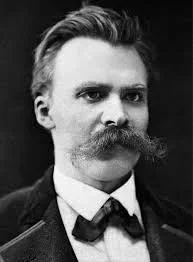
Friedrich Nietzsche
* * *
Human beings wander. Human beings don’t at some point first begin to wander. They are always already wandering […]. — Martin Heidegger[†]
According to Hebraic scriptures, it took the ancient Israelites a full forty years of aimless wandering in the desert wastelands of the Near East before they at last found their way home, to the place where they had always belonged, and in coming to which at last they could finally and fully become themselves. Their story[‡] speaks the truth of how anyone and everyone must answer the call that conscience — at least according to Nietzsche, as I cited him writing at the very beginning of this post — addresses to us all, the very call to become who we are.
We are all, without exception, born wandering, just as Heidegger remarks in the citation from him with which I opened this present section of today’s post. In that sense, we are all no different from the Biblical Israelites, regardless of our specific nationality, our religious heritage, or in what region of the earth we find ourselves wandering, always underway to ourselves.
What is more, so long as we continue to wander in search of our own “promised land,” we are also just like the Israelites of Hebrew scripture in another way. That is, we will all eventually, no matter how long our own “forty years” may take to expire, find our way home, to where we have always belonged.
Israel’s forty years of wandering in the wilderness are traditionally given as occurring sometime around the 15th to 13th centuries BCE. Thousands of years later, Elizabeth Barrett Browning, the great British 19th century CE poet, wrote these wonderful, wonder-filled lines in one of her poems:
Earth’s crammed with heaven, And every common bush afire with God; But only he who sees, takes off his shoes, — The rest sit round it and pluck blackberries, And daub their natural faces unaware.[§]
Let us all pray, both together and separately, that we may all, each and every one of us, be given eyes to see the truth that all bushes are always burning, and may we all thereby be given at last sense enough to take off our shoes. After all, when our prayer is answered, we will at last see and understand that all along we have indeed been standing — and walking — on holy ground!
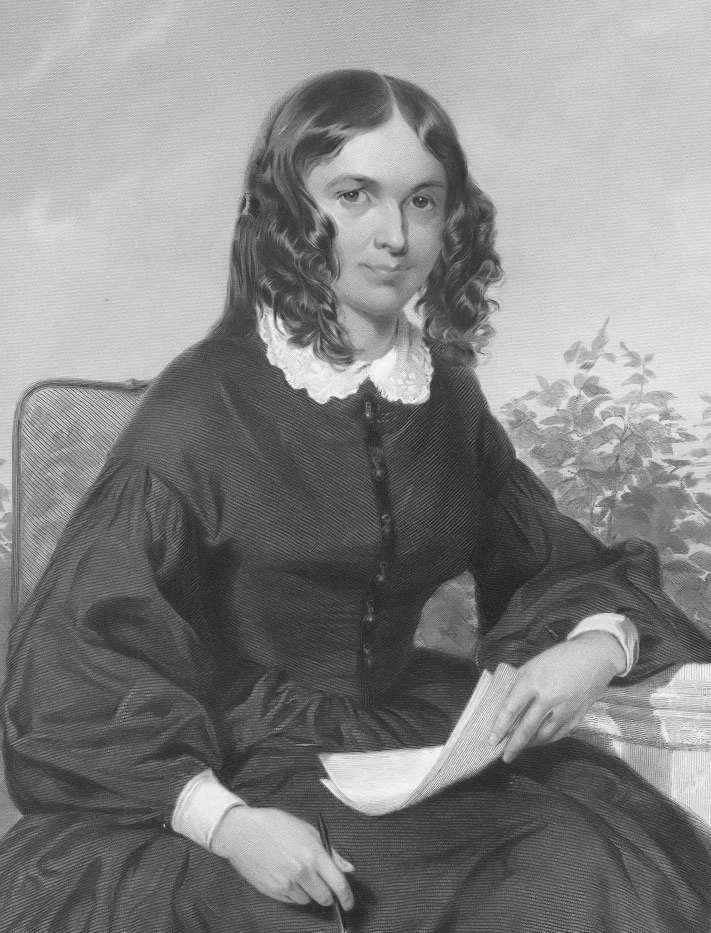
Elizabeth Barrett Browning
[*]Friedrich Nietzsche, Die fröhliche Wissenschaft, Aphorismus 270 (my translation).
[†] Heidegger, “Vom Wesen der Wahrheit“ (“On the Essence of Truth”) in Wegmarken: Gesamtausgabe, Bd. 9 (Frankfurt am Main: Klostermann, 1976), p. 196, my translation.
[‡] And it is just that, a “story,” precisely in the sense of being a “fiction” — which is to say something “made up,” given that the word fiction is derived from the Proto-Indo-European root *dheigh- “to form, build.” As William Faukner knew and said, a well-crafted “fiction,” a made-up story of the very sort that is the telling of Israel’s wandering in the desert for forty-years before coming to “the promised land,” speaks more genuine truth than does even the most accurate “journalistic account.”
[§] Aurora Leigh, Book Seven (1856).
