
I shall borrow a quote from one of my masters, Jacques Lacan, who — never one to beat around the bush — offered a direct definition of the real, a bit of a sly one, which is: the real is the dead-end of formalization. — Alain Badiou[*]
The above citation is the opening paragraph of the second of three parts of a very short book the important contemporary French philosopher Alain Badiou (born 1937) first published just eleven years ago and entitled À la recherche du réel perdu. That title itself alludes to the title of the famous seven-volume magnum opus by Marcel Proust (1871-1922), À la recherche du temps perdu. The most read English translation of Proust’s great work is called In Search of Lost Time, in resonance with which I will translate the title of Badiou’s as In Search of Lost Reality.
Throughout his entire career as a philosopher, Badiou has self-identified as a Platonist, and as a Platonist he frequently makes use of Plato’s famous “Allegory of the Cave” in Book 7 of The Republic, Plato’s most widely read Socratic dialogue. In his allegory, Plato has Socrates depict humanity as lost amidst illusions. In fact, the dialogue depicts all us humans as lost in what are in truth no more than illusions of the second order, as it were: illusions of illusions, mere images of images. If we use the definition of “reality” that Badiou cites from Lacan in the lines with which I began this post, we could well say that Plato depicts us all as lost amidst mere “formalizations of formalizations.”
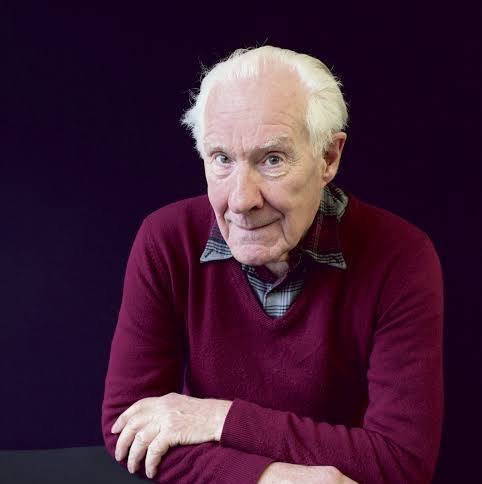
Alain Badiou
* * *
What is more, as Badiou himself discusses in a number of his own works, our contemporary hierarchical global techno-scientific capitalist pseudo-society casts us ever deeper and deeper into a cave such as Plato depicts in his allegory. Indeed, our false simulacrum of a society more and more tightly wraps us all in chains, not allowing us any freedom to cast our eyes around us. We are all thus cast, just as are the prisoners at the bottom of Plato’s cave, in chains in such a way that we cannot look anywhere but straight ahead — that is, toward the mere images of images that the forces which enchain us present to us as reality itself.
In such chains our global techno-scientific, capitalist, false society ever more tightly enchains us all, including those within that same pseudo-society who are assigned the task of further enchaining the rest of us. By all its techno-scientific inventions such as “Artificial Intelligence”[†] and the very computers that use AI, our global system today enchains us all — including all the inventors of such inventions — ever more tightly. By constantly casting and recasting illusory formalizations of formalizations around us all, our current pseudo-society in truth distances us all ever further from reality itself.
I address just that issue in the citation below, with which I will end this current section of today’s post. That citation comes from After Postmodernity : The Impotence of the Modern[‡] a book of my own that I published at the beginning of the current century, the main contents of which are the original English versions of four lectures on “postmodern” philosophy that I gave by invitation at Renmin University (Peoples University) in Beijing, China, in the fall of 1998.
After my fourth and final lecture I delivered what I entitled “Concluding Remarks to the Series of Four Lectures: Writing the Rules for ‘What Will Have Been Done’,” the first paragraph of which follows immediately below. With that paragraph I will now conclude this section of today’s post.
Especially as it has come to be today, at the end of the twentieth century by Western reckoning, the story Western modernity is inseparable from the story of the rise to hegemony of science and technology. The modern West, which is to say Western modernity, was born of the compulsion to establish man's ([…]I use the masculine form intentionally) dominion and control over nature. As is the way of compulsions, that compulsion progressively drove out or marginalized all other concerns, until today it stands as the singularly definitive drive and desire of the entire West, even if the West at issue now extends to cover the entire globe, including us here this afternoon at the People's University in Beijing. Today, the compulsion to dominate and control nature has become the dominant compulsion of the global market, as it is called. The "technological imperative" of “performativity" […] has become the despotic rule to which human life everywhere is in process of being subjected. In short, the compulsive desire to dominate and control nature, an in principle insatiable desire (that's what makes it compulsive, of course), has replaced nature itself as what dominates and controls human existence.[§]
* * *[**]
The truth is that we are all radically dispossessed of any true contact with genuine reality. However, it should never be forgotten that such common human dispossession weighs more heavily on some of us than on others. It weighs — still even after years of feminist protest and action — more heavily on women in our society than it does on men, for example. It also weighs far more heavily on members of ethnic minorities of human populations than it does on members of the dominant majorities. So, too, does it weigh far more heavily on gay, lesbian, bisexual, intersexual, queer, asexual, and transgender individuals than it does on those who are cisgender.
The daily suffering of all of those subsections of societies today is far greater than that of those in dominant classes. Nevertheless, it is not only oppressed minorities in our pseudo-society who are dispossessed. So, too, are the majorities who oppress those minorities. All of us alike are dispossessed, regardless whether we belong to some oppressed segment of the population or to the oppressive segment thereof — as I, a white cisgender male, do.
Marx and Engels long ago realized the essence of that point clearly when they argued that the oppressed, by their own liberation, would also effect the liberation of the oppressors. That is true only because we all — oppressed and oppressors alike — share the same underlying common human dispossession. That is also why psychoanalysts such as Eric Fromm and, above all, Frantz Fanon — both of whom belonged among the oppressed, Fromm as a Jew and Fanon as a Black — argued that universal human liberation can only occur with the help such aid as psychoanalysis or its equivalents provide, both at the level of the individual and at the level of society.
It is not the truth of our universally shared human dispossession that is new today. That truth is not itself new at all. It is an ancient truth, indeed, an archaic one, in the original sense of archaic.
The originary underlying truth of our universally common human dispossession is, in fact, the truth that we must first be sprung free from the illusions that blind us, before we can at last for the very first time truly be given ourselves to be.[††] The originary underlying truth is that we are all, without exception, finally fully born only through a sort of re-birth, as Christianity puts it.
* * *
Nor is it only Christianity that acknowledges that originary underlying truth. So does Buddhism, as exemplified in the teaching from the Mahayana Buddhist tradition that "Nirvana," the goal of all our striving, whether we know it or not, is "Samsara," the ever-on-rolling wheel of aversion and, above all, of ignorance. Nor is that originary underlying truth unacknowledged in Hinduism, Taoism, Islam, Confucianism, or "animistic" religions. What is more, it is also to be found in teachings throughout the Western philosophical tradition — seminally, precisely, in Plato's “Allegory of the Cave.”
The truth so universally if hiddenly acknowledged is, to repeat it again, that to be born human — understood "archaically," in the sense that I am using that term — is to be born enchained within delusion, and dependent on someone or something carrying to us the message that escape from our chains is possible, and showing us how to seize that possibility and actualize it.
* * *
To be born human is to be born archaically dispossessed of our very selves. It is in that sense always to start off as self-dispossessed. That is so even, and perhaps especially, if we are "self-dispossessed" in a second sense, namely, in the sense that it is we ourselves who effect the dispossession. When that is so, then we are “self-dispossessed” in a doublesense.
At any rate, whether we are dispossessed of by others or by our own selves, the first step toward overcoming our common human dispossession and acquiring thereby the possibility of finally becoming who we really are, is becoming aware of our dispossession itself. To overcome that dispossession, we must unchain ourselves.
* * *
Either we humans may arrive at a place where what is more essentially reveals itself to us, but at first we are not yet capable of comprehending what thus reveals itself; or we may fall away from the stance of such essential knowledge and be cast back into the domain of common actuality, but without being able to accept what is customary and practiced therein as the truly real. — Martin Heidegger[‡‡]
The citation just above from Heidegger strikes me as an appropriate way to bring this entire post, which I’ve entitled “Finding the Real,” to a conclusion. Therefore, I hereby end today’s so-entitled post.
[*] Alain Badiou, À la recherche du réel perdu (© Librairie Arthème Fayard, 2015), p. 28, in my own free translation.
[†] To use that oxymoron!
[‡] (© Frank Seeburger, 2021). Those lectures were originally published as a book in Chinese a few months after I first delivered them.
[§] Ibid., p. 138.
[**] This entire preceding section as well as the following one of today’s post are slightly edited versions of part of what I wrote in 2020 as an “Afterword” for a new publication of the Chinese version of my Beijing lectures, and which I then included in my own 2021 English publication of those same lectures (ibid.).
[††] Concerning which see my preceding two-part post: “The Call to Become Ourselves.”
[‡‡] Heidegger, “Platons Lehre von der Wahrheit,“ a lecture-series first delivered in 1931-32, and later included as one of the pieces in Wegmarken, available as vol. 9 of Heidegger’s Gesamtausgabe (© Frankfurt am Main: Vittorio Klostermann, 1976), p. 216 (in my own free and interpretive translation.)
